A simple seasonal reminder for a safer home.
When the clocks go back, most of us think about shorter days, colder evenings, and the start of another heating season.
It is also a useful reminder to check something much more important: the smoke and carbon monoxide alarms around your home.
The U.S. Fire Administration (USFA) recommends testing smoke and carbon monoxide alarms every month.
The seasonal clock change should not replace regular testing, but it can be a useful reminder to walk through the home, check each alarm, and make sure the devices you depend on are ready when you need them.
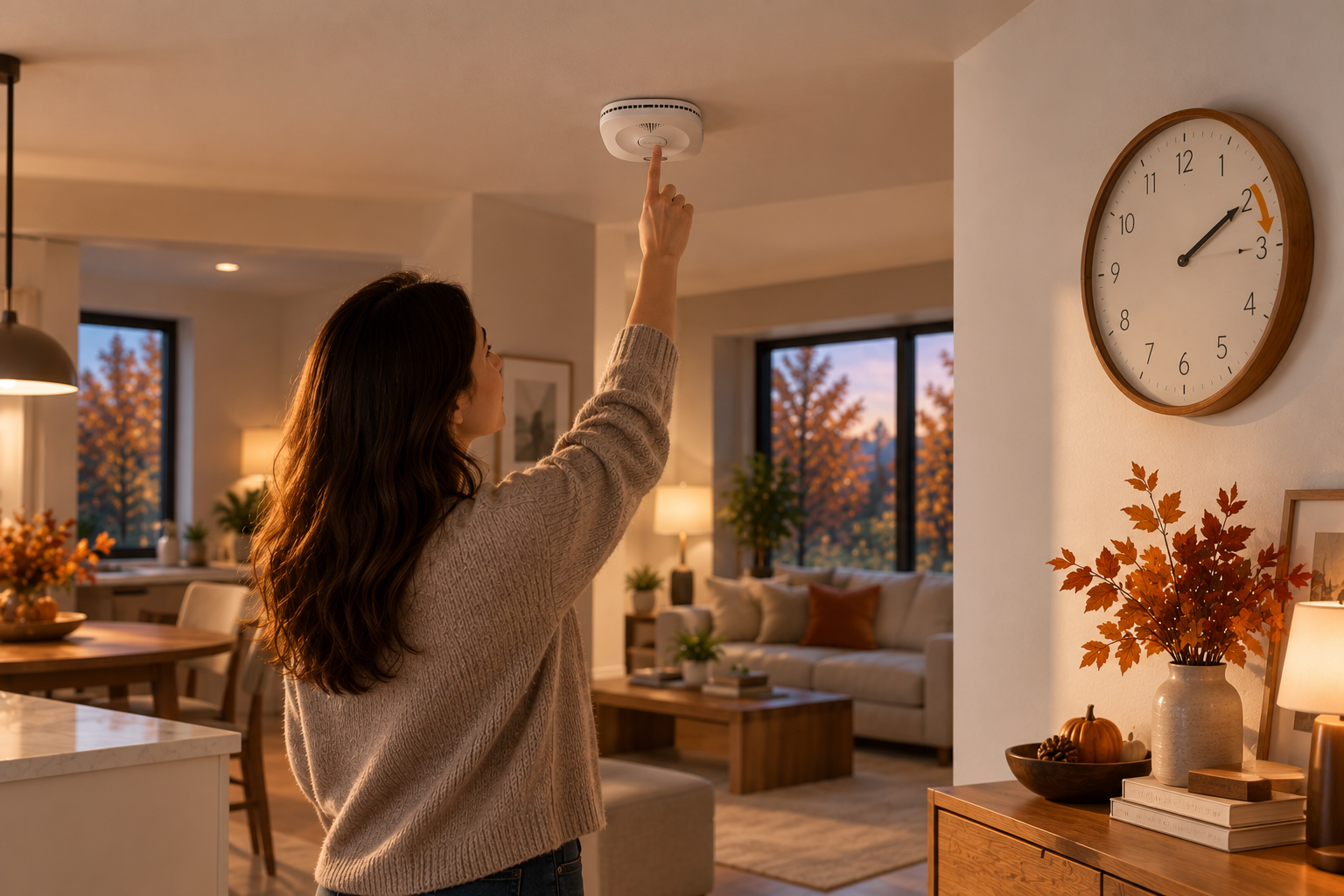
Start with the Test Button
Go through the alarms in your home and use the built-in test function according to the manufacturer’s instructions.
For a smoke alarm, you should be able to clearly hear the alarm sound when the test is activated.
NFPA recommends testing smoke alarms at least once a month, while the U.S. Consumer Product Safety Commission also recommends monthly testing for both smoke and CO alarms.
If an alarm does not respond normally, do not ignore it. Check the product instructions, power or battery status, and whether the alarm has reached the end of its service life.
The clock change should be a reminder — not the only time of year you test.
Check More Than One Alarm
A working alarm in the hallway is important.
But what matters in a real emergency is whether the warning can be heard where people actually are — especially when they are asleep.
Walk through the home and think about:
-
Bedrooms with closed doors
-
Different floors of the house
-
Basements or lower levels
-
Rooms far from the first alarm
-
Areas where children, older adults, or heavy sleepers may be sleeping
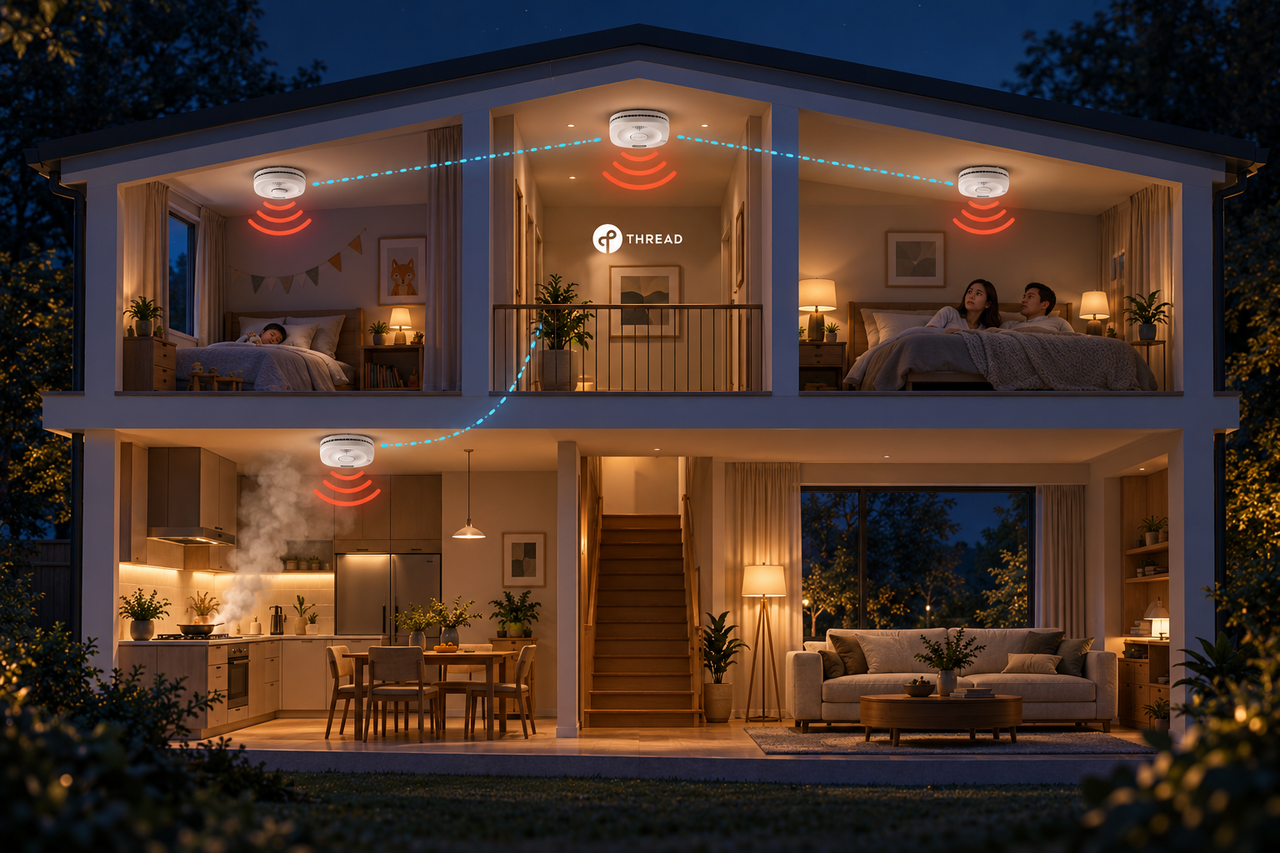
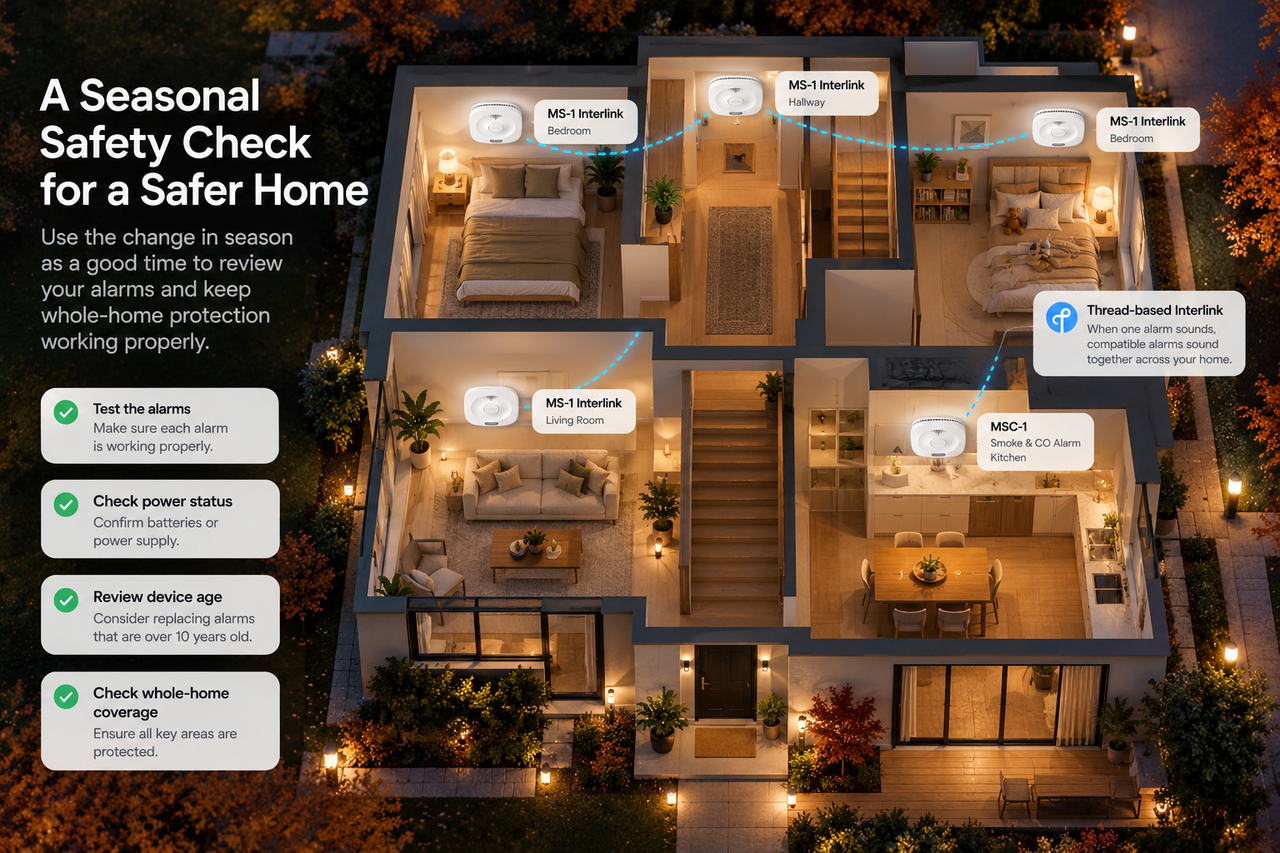
NFPA recommends smoke alarms inside sleeping rooms, outside separate sleeping areas, and on every level of the home. It also recommends interconnected smoke alarms so that when one sounds, they all sound.
Testing an alarm is therefore not only about asking:
“Does this alarm make a sound?”
It is also worth asking:
“Would everyone in the home hear the warning?”
Think About Smoke and CO Together
As temperatures fall, furnaces, fireplaces, space heaters, and other heating equipment often return to regular use.
That makes fall a good time to check both smoke and carbon monoxide protection.
Carbon monoxide cannot be seen or smelled, which is why a working CO alarm is important in homes where CO risks may be present. CPSC specifically highlights fire and carbon monoxide risks associated with heating equipment during colder weather and recommends working smoke and CO alarms throughout the home.
If you use separate smoke and CO alarms, test both.
If you use a combination alarm such as Sensereo MSC-1, include its smoke and CO alarm functions in your regular testing routine according to the product instructions.
Check the Age and Power Status Too
An alarm can still be mounted on the ceiling long after it should have been replaced.
Check the manufacturing or replacement information on each device.
NFPA recommends replacing smoke alarms when they are 10 years old. For CO alarms, service life can vary by product, so follow the replacement or end-of-life guidance provided by the manufacturer.
Also check for:
-
Low-battery warnings
-
End-of-life warnings
-
Physical damage
-
Dust or obstruction around the alarm
-
Missing or disconnected power sources
For alarms with replaceable batteries, follow the manufacturer’s battery replacement instructions. Alarms with sealed long-life batteries should be handled according to the instructions for that specific model.
From a Working Alarm to Whole-Home Protection
A seasonal alarm check is also a good opportunity to look at the home as a system rather than as a collection of individual devices.
Sensereo MS-1 Interlink is designed around that idea.
When one compatible MS-1 Interlink detects smoke, it can send the alarm event across the local Thread network so other connected alarms can also sound.
That helps turn a warning in one room into a warning across more of the home.
For multi-story homes, larger floor plans, or bedrooms separated from common living areas, that difference matters.
And once you start looking at your home as a whole, smoke and CO protection may not be the only thing you think about. Maybe there is another everyday risk or comfort issue you wish your smart home could monitor better.
We’re asking exactly that question in Help Shape Our Next Smart Home Sensor — and your ideas can help shape what Sensereo builds next.
Five Minutes Now, One Less Thing to Wonder About Later
When the clocks go back, take a few minutes before moving on with the rest of your day.
Test your smoke alarms.
Test your CO alarms.
Check their age and power status.
And think about whether a warning in one part of the home can reach the people in another.
A smart home is not only about knowing what is happening.
It is about making sure the people inside the home can respond when it matters.
What Would You Want Your Home to Monitor Next?
Testing your smoke and CO alarms is a good reminder to look beyond a single device and think about the home as a whole.
Maybe there is a basement where you worry about water leaks, a room where you want better air-quality monitoring, a door you wish you could check remotely, or another everyday problem your current smart home does not yet cover.
That is exactly what Sensereo Sensor Lab is designed to explore.
We’re inviting the community to tell us how they use their smart home today, what they wish they could monitor or automate better, and which type of sensor Sensereo should consider building next.
Your feedback can help shape what we build next.