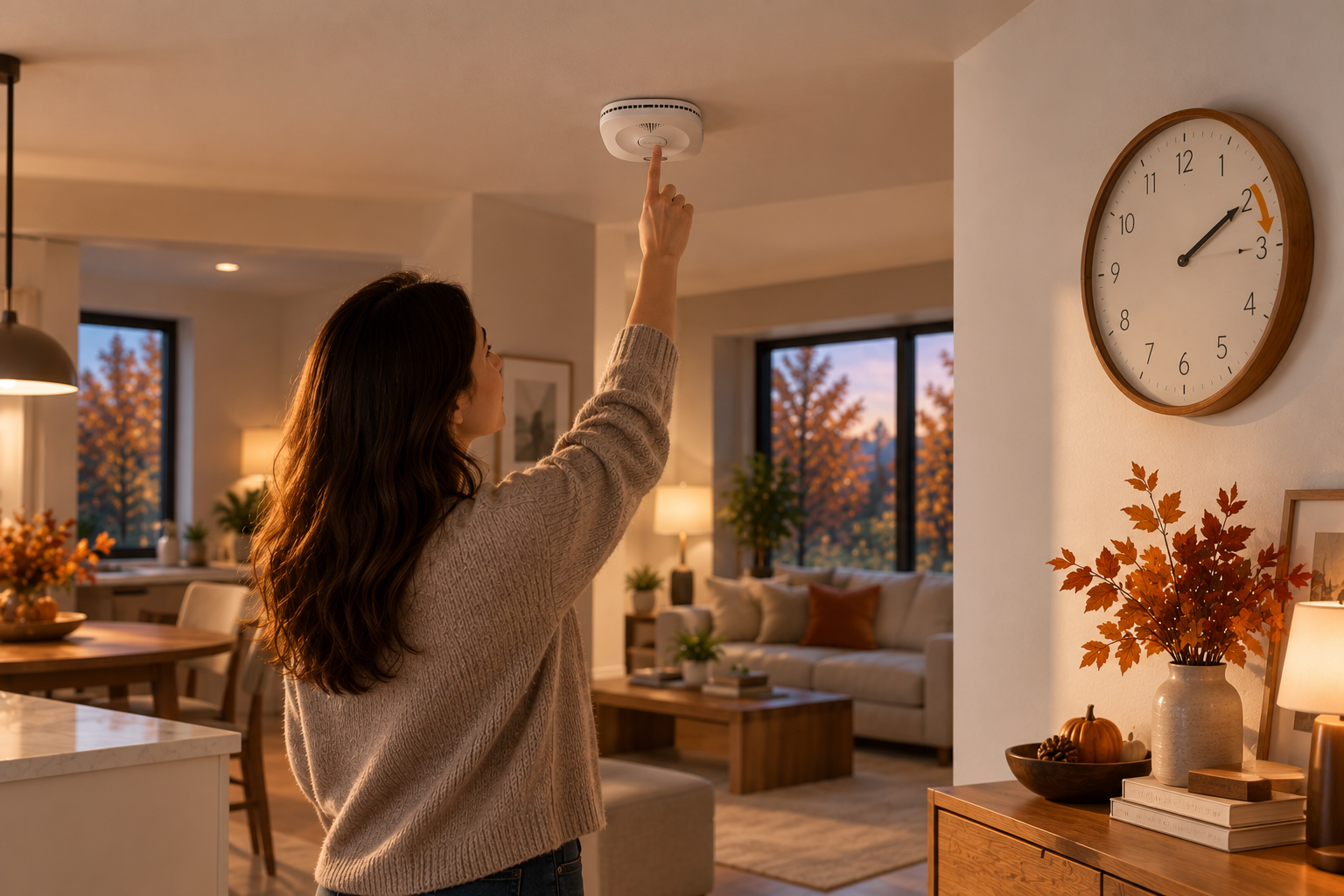
Smoke alarms have a limited service life. The U.S. Fire Administration recommends replacing them no longer than 10 years after manufacture, but some models specify a shorter period.
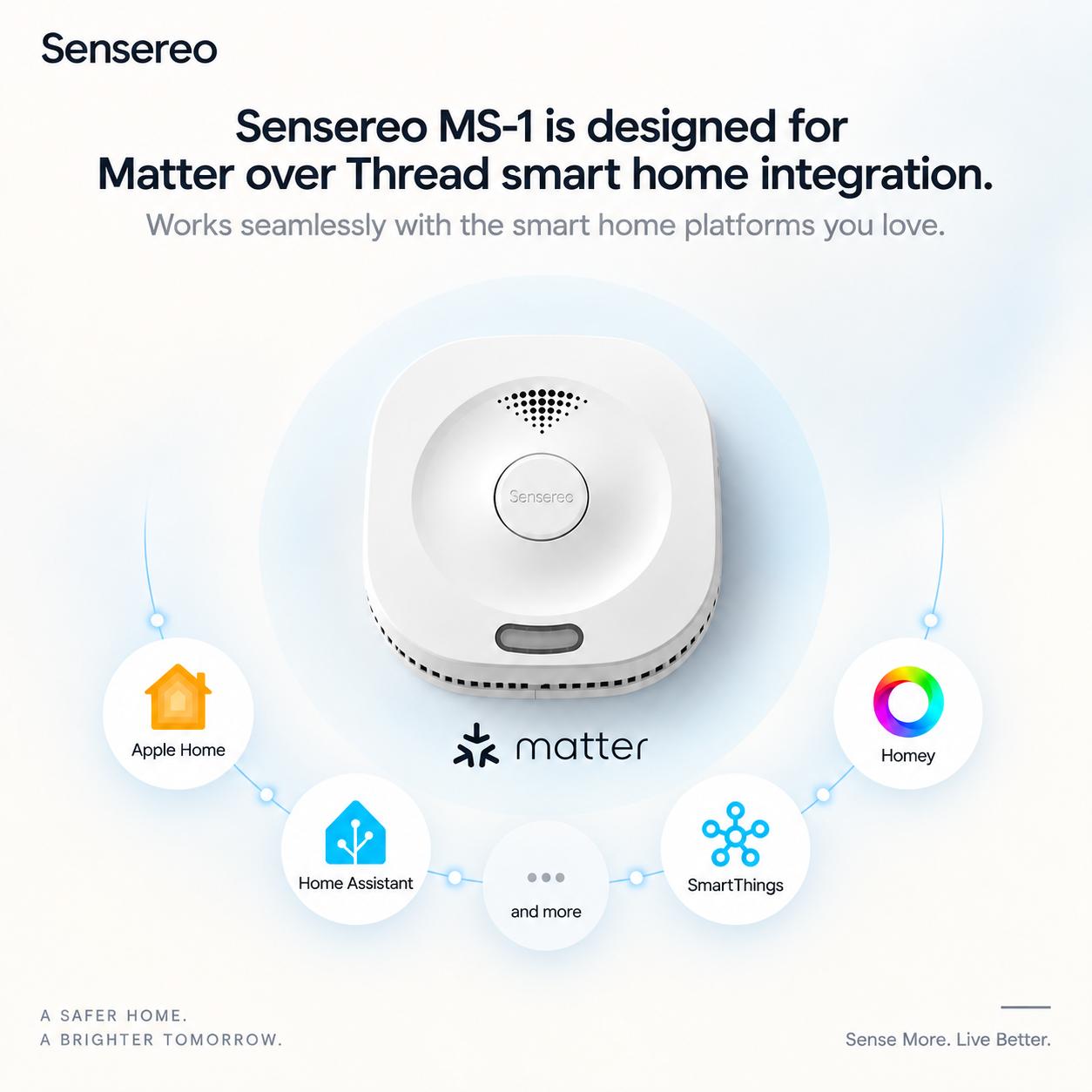
For example, the Sensereo MS-1 user manual instructs users to replace the device after seven years of use.
Always follow the replacement date and instructions for your exact model—even if it still passes its tests.
How to Check Your Smoke Alarm’s Expiry Date
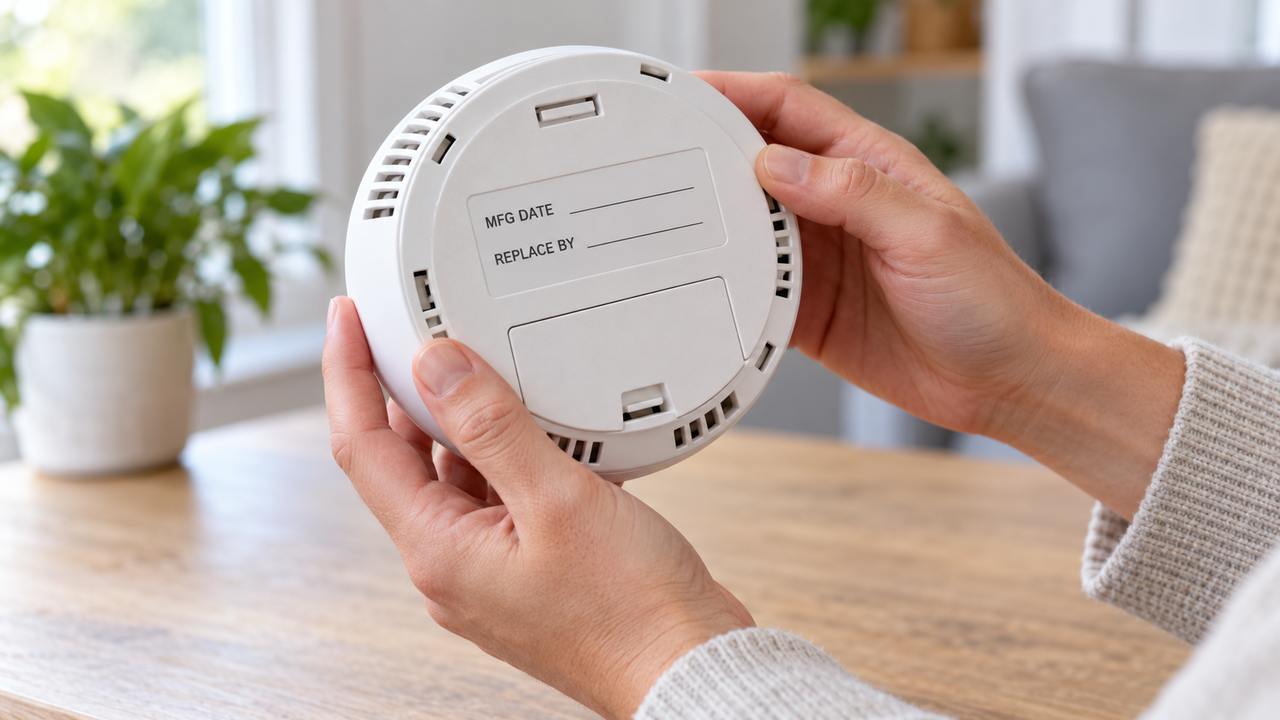
Look for the model number and date information on the alarm’s label. Common fields include:
-
Manufacture Date: When the device was made.
-
Replace By or Expiry Date: When replacement is due.
-
Installation or Activation Date: Relevant where specified by the manufacturer.
Do not assume the service life starts on the day you bought the alarm. Check the manual’s counting method.
If you cannot establish the alarm’s age, arrange replacement rather than relying on its appearance. Photograph the label and record its location and replacement date for future checks.
When Should You Replace a Smoke Alarm?
Replace the alarm when it reaches its specified service life or gives an end-of-life warning. A failed test or persistent fault also requires prompt action according to the manufacturer’s instructions.
Battery life, alarm service life and warranty length are different things. Replacing a removable battery can restore power, but it does not renew the alarm’s sensors or extend its replacement deadline.
A repeating chirp may indicate low power, a fault or end of life. Check your model’s instructions rather than assuming every chirp means the battery needs changing.
How to Test a Smoke Alarm Safely
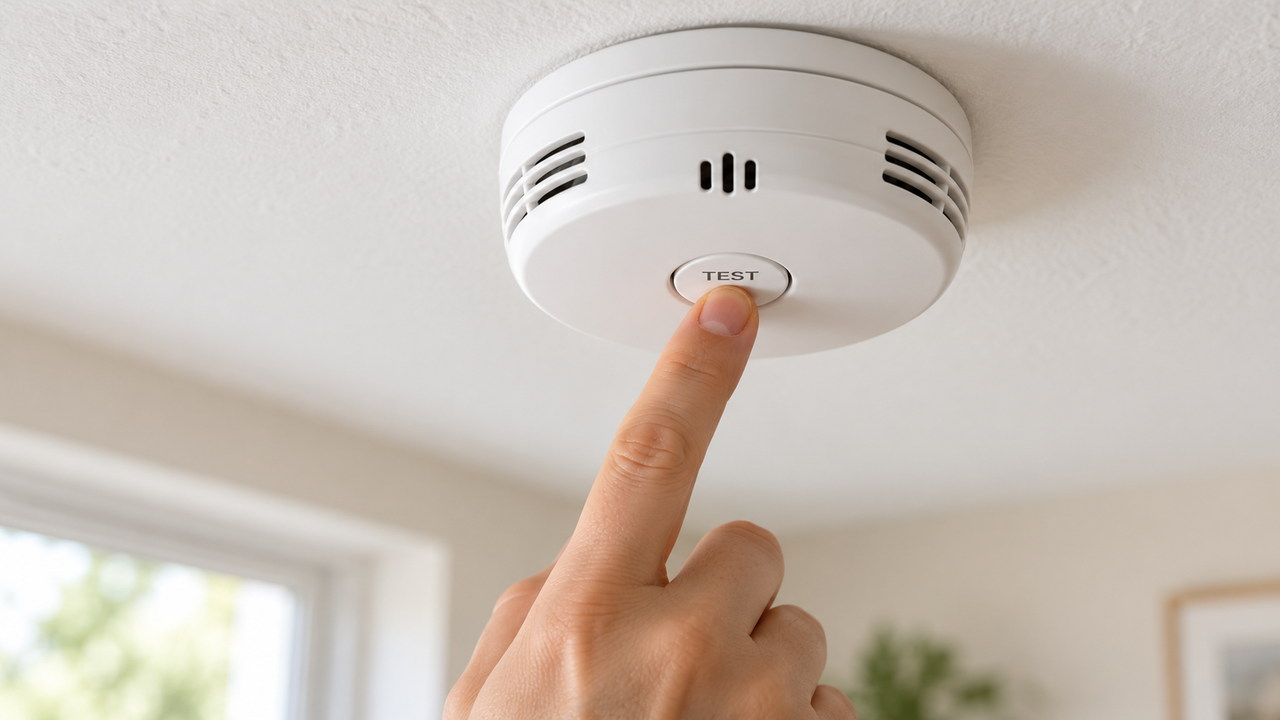
Use the test button or procedure specified in the manual:
-
Tell everyone at home that a planned test is starting.
-
Operate the test button as instructed and allow the full test to finish.
-
Check that the expected sounds, lights and interconnected alarms respond.
-
Record the result and investigate any unexpected response.
The U.S. Fire Administration recommends monthly testing, while some manufacturers specify weekly checks. Follow your model’s requirements and local guidance.
A successful test confirms the functions covered by that procedure. It does not measure remaining lifespan or justify using an expired alarm.
Never improvise tests with matches, cigarettes or open flames. These can damage the alarm or create a fire risk.
Make Your Next Check Easy
Keep a record of each alarm’s model, replacement date and latest test result. Clean it as instructed and set reminders for testing and replacement.
Start today: check the date on every smoke alarm in your home. For model-specific guidance, consult the Sensereo MS-1 user manual.